My reflections for World Mental Health Day by Charlie Hart (Ausome Charlie)
“It’s OK not to be OK”, so the well-meaning slogan goes. That slogan bugs my daughter Z, who suffers from moderate depression and severe anxiety. She cannot access treatment through CAMHS (apparently, she does not exhibit anxiety over and above what can be expected in an autistic teenager) and would feel uncomfortable talking about her feelings anyway. She cannot get prescribed antidepressants due to her age. She does not consider it “OK” to suffer and struggle like she does.
As a late-diagnosed autistic adult with alexithymia (problems recognising my own emotions), I don’t always know when I am not OK. “How are you?”, people ask, but often I don’t know the answer and just shrug. The well-meaning copy/paste sentiment that bugs me is “It is good to talk, my door is always open, the kettle is on” because that is not enough; I need those who care to notice something is wrong and actively reach out to me.
Since my son Iggy ended his life in April 2019, aged 15, I get asked “how do you cope?” My answer: “I wasn’t given a choice”, or, if I am feeling facetious, “oh you know, hanging in there”. Sometimes, I can even talk calmly and bluntly about what I have been through, not just the loss but the horrors of how it happened. Well, I may appear calm on the surface, but the tell-tale signs are my words tumbling out too quickly, my breath quickening. Often with alexithymia a tidal wave of emotion is starting to swirl under the surface, gathering force ready to sweep me away as soon as I stop rushing from one activity to another and notice it’s there.
Yes, we all have bad days and low moods, but if you are often full of dread, if you often have a low mood, or plagued with intrusive thoughts, or lying awake ruminating into the small hours, having panic attacks… please take notice.
Most of us will experience poor mental health at some time in our lives. Yes, there are documented typical signs, but our brains are unique, and the symptoms or warning signs are personal and individual. Anxiety to me, for instance, feels like a writhing bag of snakes in my belly, so I struggle to eat, my sensory sensitivities worsen. I notice the physiological effects before the feelings.
Learn when to practice self-care and what works for you, when and how to lean on your support network, and when to seek professional treatment and/or medication. Self-care for me might look like getting out in the fresh air and putting one foot in front of the other with changing scenery, or maybe taking some time to blog about my spiralling worries and nagging doubts, taking the sting out of those what-ifs and maybes.
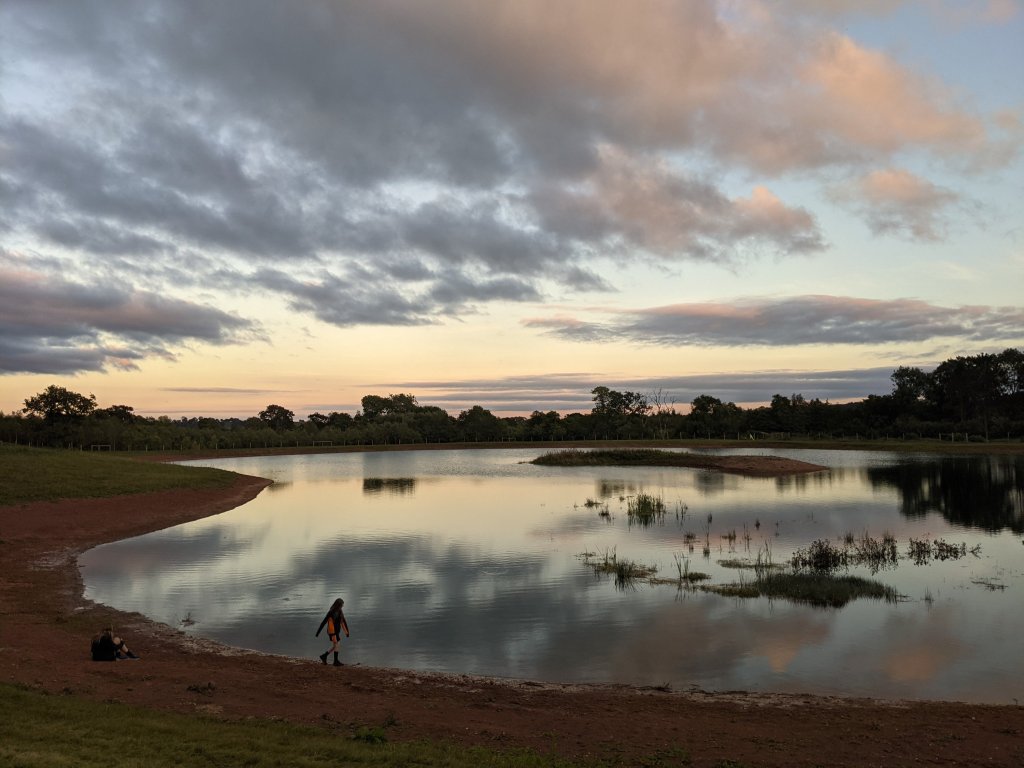
Actively seeking “glimmers” helps too; those little things that bring a little spark of joy, kind of the opposite of a trigger. For me, glimmers can be literal. I find it uplifting to look at reflections of bridges and trees in lakes or rivers, especially when the sunshine or moonshine is reflecting in the ripples on the water.
My daughter Z is uplifted by adding a new plushie to her collection, or baking cookies.
With my younger daughter J, it is cosplaying, and singing.
What are yours?
 Ausome Charlie