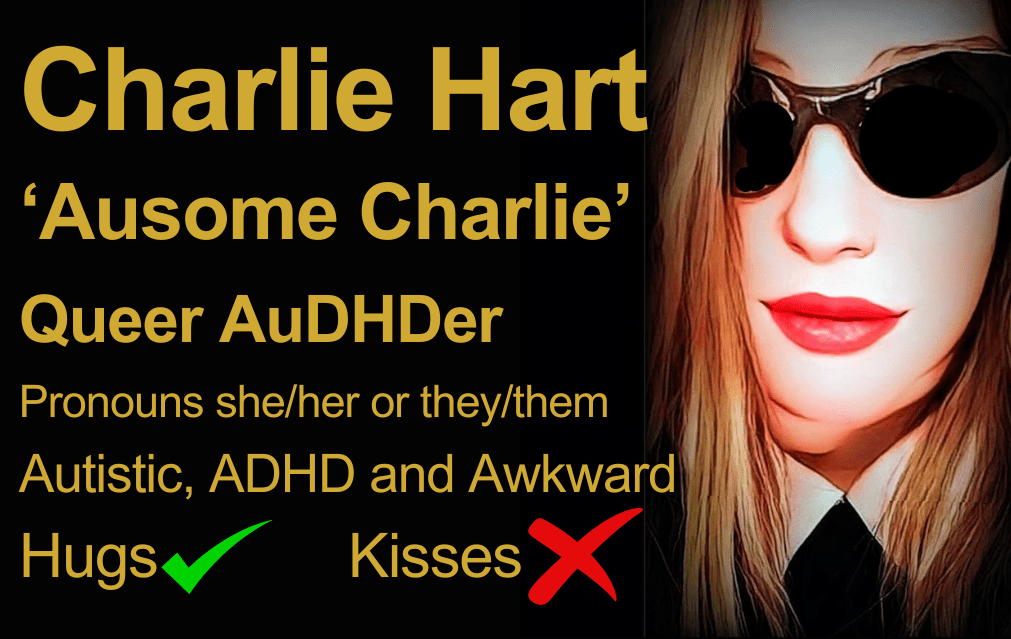
It is International Pronouns Day so here is what my pronouns mean and why I share them.
“She/they” (or I sometimes express this “she/her or they/them”) means that I am happy for you to refer to me using the traditional female pronouns (she/her) or standard gender-neutral alternatives (they/them/their).
Although I do identify as a woman and I am not trans nor non-binary, I am gender non-conforming.
Always the tomboy, my preferred name has always been Charlie rather than the Charlotte that is on my birth certificate. In fact, I recently changed my name to Charlie by deed poll.
I do not hate the name Charlotte – my parents named me after the author Charlotte Bronte who I love, but I just do not feel like a feminine name fits me. I have felt this way since I realised as a small child that I feel exactly the same about my name and gender as the character George (Georgina) does in the Famous Five books by Enid Blyton.
Due to my name being Charlie, sometimes people who I meet through work make assumptions about my gender (“ooh, I was expecting a man” they often say, making assumptions based on my voice or appearance, after previously making assumptions based on my name). Communicating my pronouns can be helpful, as that can spare blushes on both sides.
More recently I have started to identify with the terms “autigender” and “neuroqueer”, as I acknowledge that my gender experience and gender expression are intrinsically linked with my autistic neurotype.
I have never been comfortable with gendered terms such as “ladies who lunch”, or “girls’ night out”, and anyway I prefer inclusive events and mixed gender company. I have friends of different genders.
Lastly, I strive to be a good ally to all members of the LGBTQIA+ community, including the trans and non-binary community. Normalising the sharing of pronouns is an allyship quick win – an easy way we can all help them feel more comfortable and included.
 Ausome Charlie