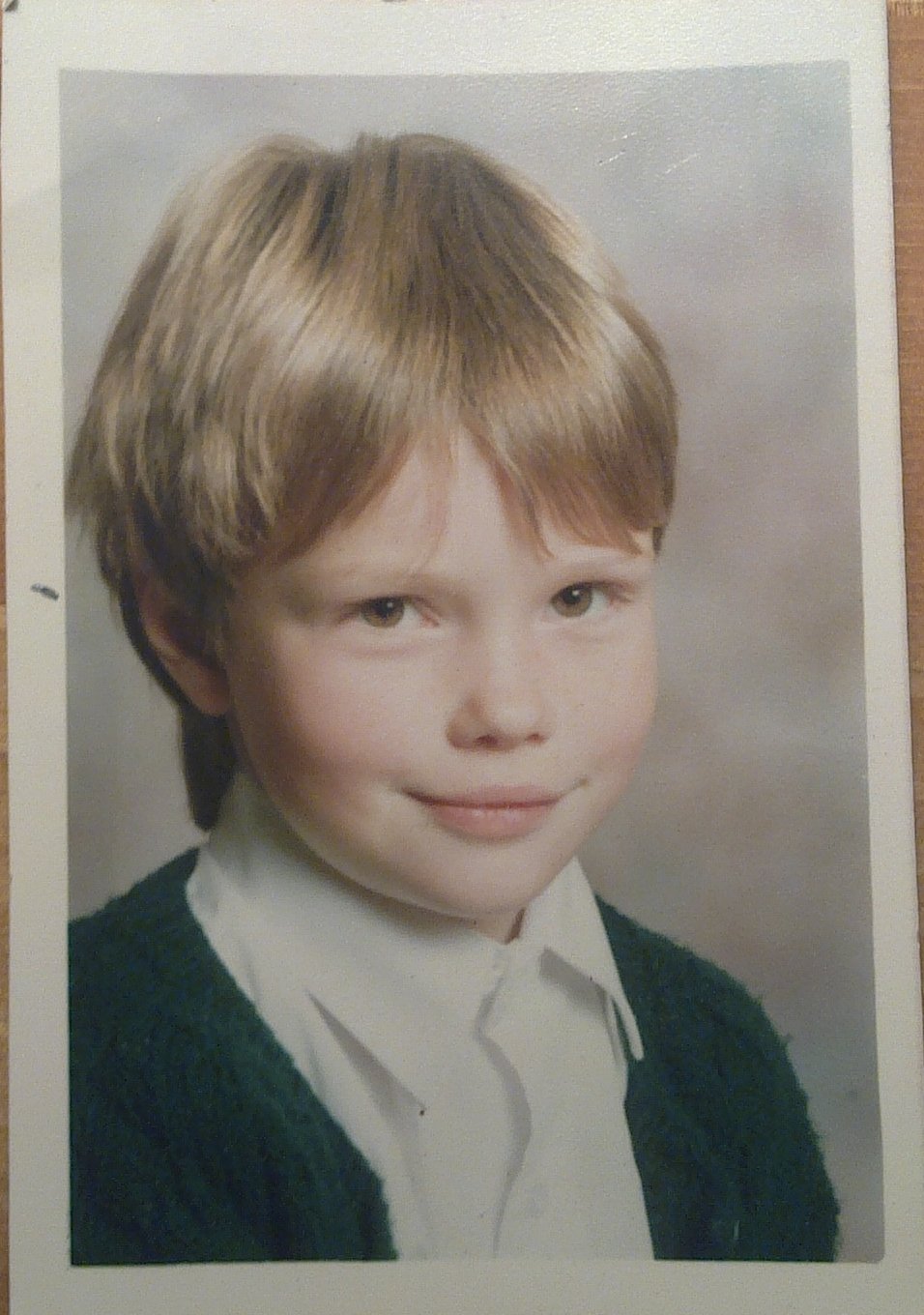
First published by Mix Diversity for Anti-Bullying Week November 2024:
Sticks and Stones | Blog | Mix Diversity
Sticks and Stones
‘Sticks and stones may break my bones, but words will never hurt me’, says the old adage, but another says, ‘the tongue wounds more than a lance’.
Although I have no experience of being wounded by a lance, I agree that verbal taunts have impacted me more profoundly than any physical attacks from school bullies ever could.
According to bullies from my formative years, I am ugly, square, rubber lips, a dork, a nerd, those repeated verbal taunts that hurt like a thousand tiny cuts, leaving psychological scars.
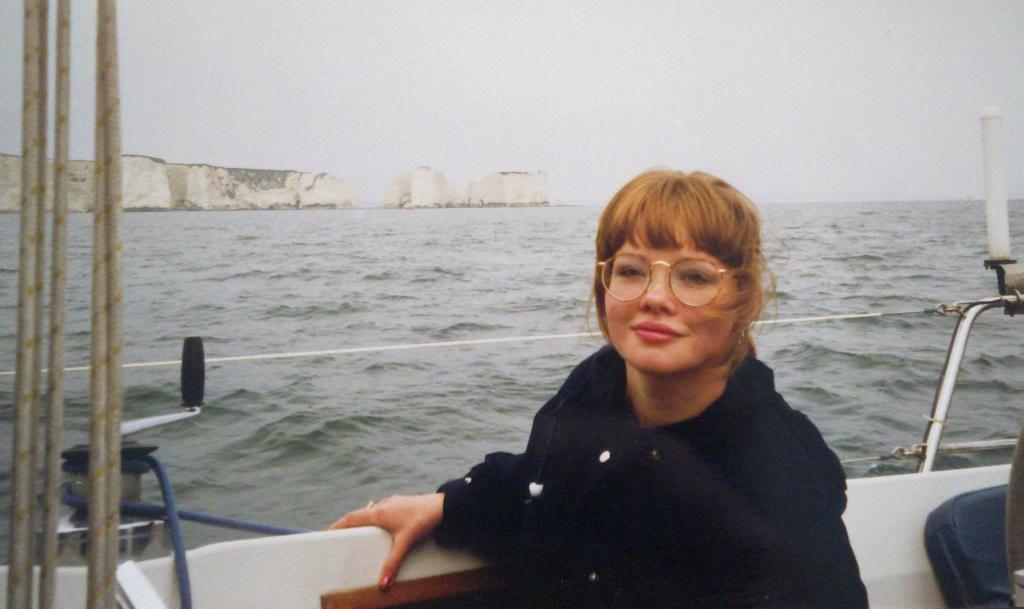
Image description: Charlie as a 15-year-old with golden blonde hair with a fringe, pink lipstick, and large round gold framed glasses, smiling awkwardly on a boat in Studland Bay, Dorset.
Cruel words can have a cumulative and enduring negative impact on our mental health, our confidence, our self-esteem, our sense of self, and our belonging in this world.
The worst trouble and danger I got myself into was in my late teens and early twenties, recklessly trying to prove bullies wrong, that I was not ‘square’, but rebellious and cool.
Many cruel words said not by school bullies, but in adulthood, and by people who probably do not see themselves as bullies, like my hypercritical negging* boyfriend from my early twenties, Golden Graham (the only character in my book whose name will not be changed).
For those unfamiliar with this term, ‘negging’ is the tactic of subtly putting somebody down just to erode their confidence and self-esteem, so they feel lucky to have you. This could be overt criticism disguised as constructive feedback, or sometimes back-handed compliments. I recall at one New Year’s Eve street party in Edinburgh, some friendly strangers in the street wished us ‘Happy New Year’ and told me I was ‘beautiful’ and my boyfriend said ‘I don’t see what all the fuss is about’. Another time, he told me ‘No women like you, and blokes only hang around you because they want to shag you’. And I remember comments like this for years, which is when my autistic superpower, my vivid audiovisual autobiographical memory, can feel like a curse.
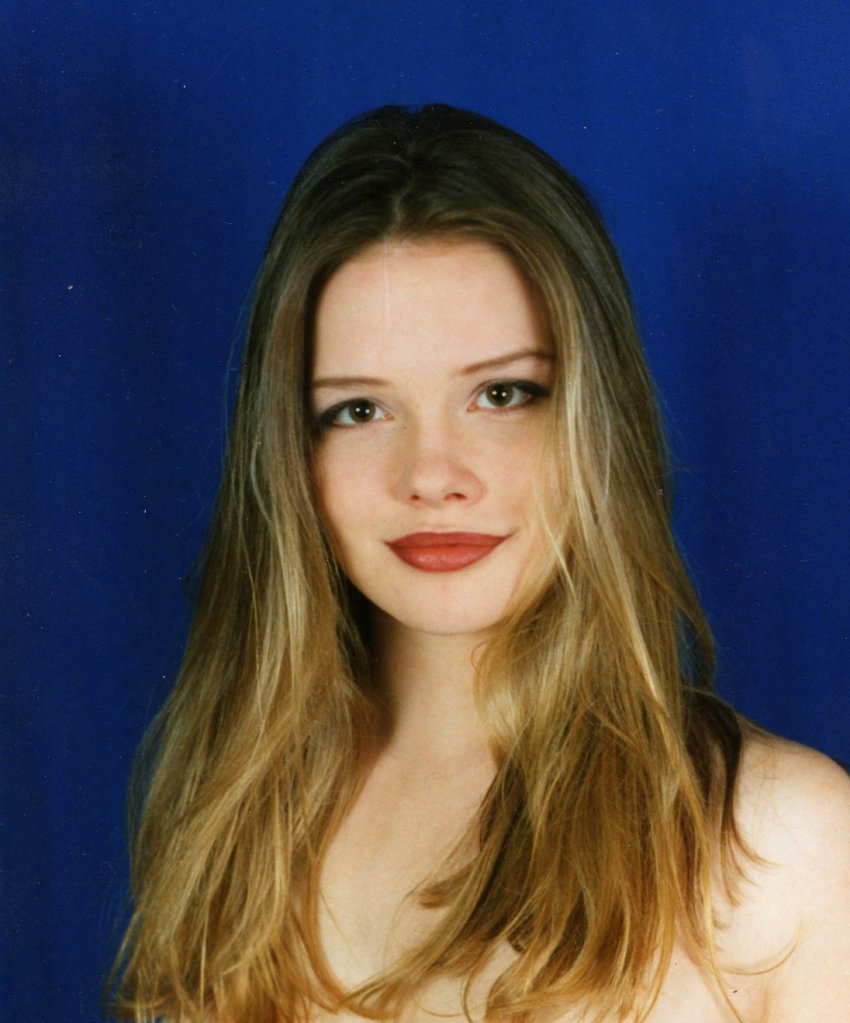
Image description: Head and shoulders photo of Charlie as a 20-year-old with long, blonde-highlighted hair, cherry lipstick, dark eye makeup, no glasses, no clothes, smiling awkwardly in front of a blue screen.
Now, at my age (48) I am more confident, and more comfortable in my own skin. Discovering my AuDHD neurotype made a huge difference to me. Metaphorically, I now carry a licence to be weird and different, and if other people don’t like it, then they are not my people.
Sometimes bullying relates to ‘protected characteristics’ under the Equality Act, 2010, and sometimes for other characteristics or quirks. Having ginger hair is not a protected characteristic, and neither is wearing glasses or having a strong regional accent. Bullying and Dignity at Work policies need to cover all characteristics and differences.
Sometimes bullying is overt, sometimes it is sneaky and covert.
Sometimes bullying is wilful cruelty, and sometimes it is unintentional and consists of frequent thoughtless microaggressions. Here are some incidents of bullying that I have seen or heard first-hand in a professional workplace:
- Cruel nicknames were used to refer to individuals by their teammates (including Silly Cabbage, I Robot, and Lemony Snicket)
- Asian accents and names were mocked.
- One heavily pregnant employee had a pregnancy photoshoot and was tagged by the photographer on Facebook, and later saw another pregnant employee in the same department posting an exaggerated parody version, with many mutual friends joining in the mockery in the comments (Okay, that heavily pregnant employee was me, and I sat up until past midnight the night before my baby was due to raise an informal grievance, which led to informal warnings, but nothing changed).
Weird and Wonderful Iggy
Talking about high school bullying on one of our walks, I told my fifteen-year-old son Iggy (also autistic) about how I was bullied at school for being unfashionable and ‘square’.
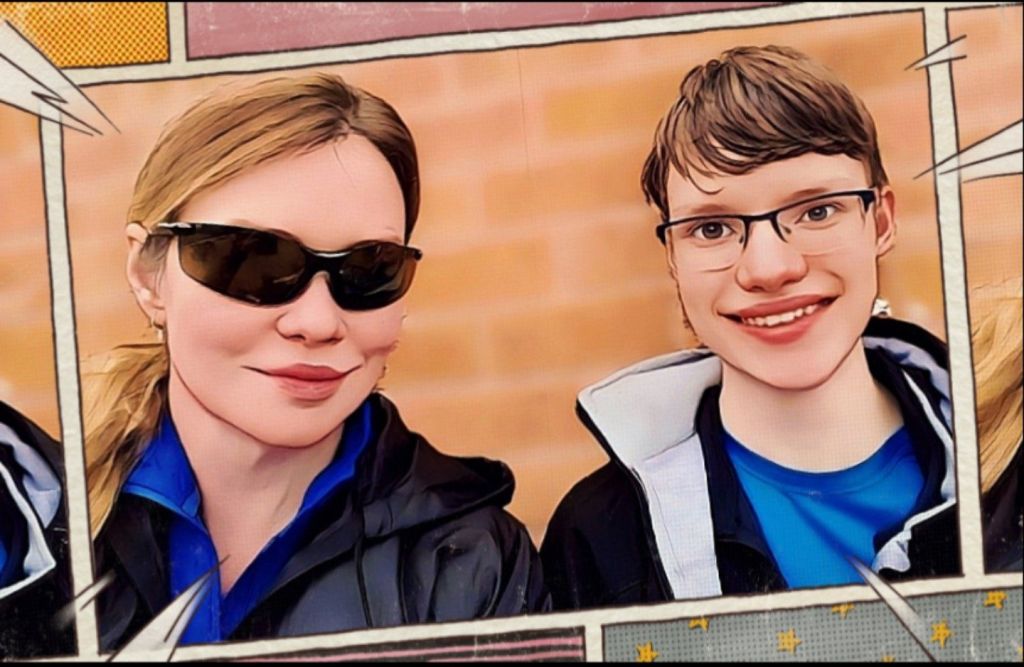
Image description: Comic strip style cartoonised photo of Charlie and Iggy, both wearing blue tops and black coats, with a brick wall behind them. Charlie has no make-up, her hair in a low ponytail, and is wearing dark wraparound sunglasses. Iggy. a 15-year-old with black-framed glasses and messy dark blonde hair, is smiling broadly. They look alike.
I explained how I tried to rise above it, by reassuring myself that I would be successful and happy in life, that the bullies would amount to nothing and end up miserable. That things would get better when I was a grown-up, as I would have my own money for clothes, and I would be able to avoid bullies. And if I couldn’t avoid them, at least by then I would have a black belt in Tae Kwon Do and I could kick their heads in with reverse turning kicks (he giggled at that).
However, there are still bullies in adult life, it was not just my clothes that made me different, and I never got that black belt.
Incidentally, in Tae Kwon Do there are five tenets: indomitable spirit, courtesy, integrity, perseverance, and self-control, which should be practised both inside and outside the dojang (training hall). I have often mused that if everybody practised Tae Kwon Do, there would be no more bullying, and nobody would need to practice Tae Kwon Do.
I was saddened by Iggy’s replies. Apparently, he had only managed to get the bullies on the school bus on his side by allowing them to use the Wi-Fi from his mobile phone (me, I had to walk miles to and from school, because the bullies on my bus were so intimidating).
And at school, they would not leave him alone. Bullying was frequent, but subtle and covert, proving difficult for the school to punish. Cruel taunts whispered whenever teachers and lunch supervisors were out of earshot.
Iggy really took it to heart, increasingly so. Bullies once teased him about a lock of hair sticking up at the back of his head after a haircut. For weeks, he obsessively plastered it flat. He eventually admitted to me:
“I just do everything I can to try and blend into the background, so they don’t notice me”
This was heart-breaking to hear, as they were dulling his weird and wonderful sparkle, but no amount of reassurance made any difference. It was too much. Iggy wanted to go unnoticed, to disappear, and not long after that walk, he removed himself from this cruel world.
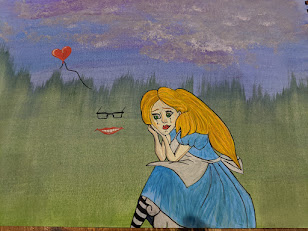
Image description: Watercolour and Posca pen painting of Charlie dressed as Alice in Wonderland, sitting with her head in her hands, tears running down her face. In front of her is a pair of black-framed glasses and a broad grin, implying Iggy disappearing like the Cheshire Cat, leaving only a grin. A red heart-shaped balloon on a string is floating away.
Respect over Resilience
I have a Utopian dream to make the world a better place, with every child is brought up to respect human differences, with zero tolerance for bullying.
But there are cruel, vindictive, nasty people everywhere, and we need to develop strategies, so we don’t let them get us down. I am not victim-blaming, nor using that loaded term ‘resilience’. Bullying must be tackled, they must face consequences and change their ways, but we need enough self-esteem to be able to rise about their taunts relatively unscathed, rather than believing what they say and growing to hate ourselves.
Yes, ‘rise above it and be the bigger person’ we are often told, but why should we have to?
Compassion for others should be prized over resilience. Why should be keep on taking these hits, and being expected to bounce back?
Growing into my Weirdness
Now, I no longer fear being mocked for being weird and different. No longer do I try to prove that I am normal and acceptable to the mainstream. I am free to be me.
And my concern is for kids and younger adults who may be similarly taunted, and similarly affected. And some, like my Iggy, may not survive.
As Editors put it in Munich,
‘People are fragile things you should know by now. Be careful what you put them through’.
#AntiBullyingWeek #AntiBullying #Neurodiversity #SuicidePrevention #DifferentIsOK
Author Bio
Charlie Hart, Assoc.CIPD (she/they), also known as ‘Ausome Charlie’, is a professional keynote speaker and HR EDI consultant, specialising in neurodiversity and LGBTQIA+ inclusion.
As a qualified HR professional with over 20 years’ HR experience, Charlie helps organisations create inclusive cultures with psychological safety and respect for all kinds of minds.
And as a tragically bereaved Mum, Charlie strives to help make the world more accepting and supportive place for her two surviving neurodivergent teenagers and others like them.
 Ausome Charlie