
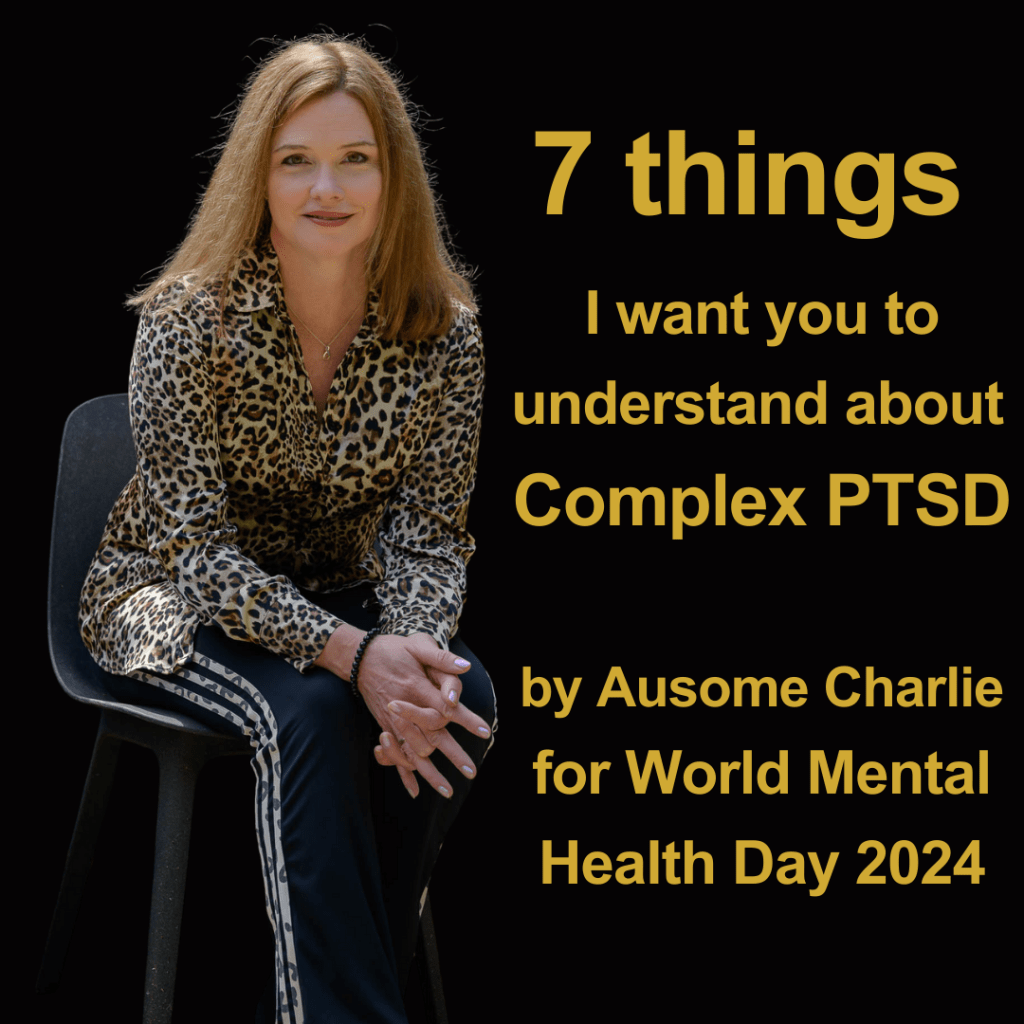
This World Mental Health Day, here are 7 things I would like you to know about my PTSD and complex PTSD (cPTSD, C-PTSD).
#WorldMentalHealthDay #PTSD #ComplexPTSD #CPTSD
I mention both because I self-identified complex PTSD, but my official diagnosis just says PTSD. Complex PTSD is not recognised by the medical profession; it is not in the DSM-5.
I am no expert on the subject, neither medically, nor academically. I have lived experience of my own PTSD, and I have discussed it with other neurodivergent friends who have it.
1) PTSD is not all about experiencing psychological triggers and flashbacks. We are not fine as long as we avoid triggers, but that is too often the way PTSD is portrayed in TV and film. Personally, I do not try hard to avoid the triggers; I brace myself for them when I can, ride them out, then practice self-care. Triggers are not the only time we are affected by our condition.
2) My PTSD was not caused by one major trauma (like my son’s suicide, my cycling accident, or the jellyfish incident), nor ‘medium-sized’ traumatic events (like missed miscarriages, or messy break-ups). It is like the snowball effect of ‘all the trauma’, yes even trauma which may seem to those around us to be less significant (for example, getting taunted by high school bullies, going through a cancer scare, even encountering dismissive attitudes at work when self-advocating for my needs).
3) It can be hard to identify, because symptoms such as hypervigilance (perceiving threats everywhere) can be misdiagnosed as other conditions such as Generalised Anxiety Disorder. Many people with PTSD are neurodivergent and we can mistakenly believe this is part and parcel of a neurodevelopmental difference.
4) I do not recommend trying to get a diagnosis of complex PTSD. Personally, mine was a horrific, retraumatising process, with many gate-keepers, and I do not recommend it. All I got out of mine was a one line note on my medical record. I might has well have stuck with the self-identification. That is all you need to request reasonable adjustments at work, apply for Access to Work etc.
5) My mental health is hugely improved by taking Sertraline, which is an SSRI (Selective Seratonin Re-uptake Inhibitor). I resisted taking SSRIs for years, because I am rarely depressed, I am an upbeat kind of person generally. However, 50mg Sertraline significantly helps me to cope with life. It helps with my hypervigilance and my volatile moods.
6) Many of my neurodivergent friends present with symptoms of complex PTSD. It is a common co-occurring mental health condition with many neurodevelopmental differences, yet it does not have to be!
7) Personally I find complex PTSD more disabling than being autistic. Partly because it is harder to advocate for my needs for PTSD, compared with something more tangible such as avoiding sensory overload from bright lights and competing noises. The lack of awareness about how PTSD manifests is one of the disabling factors… yet we rarely see posts about PTSD on World Mental Health Day!
 Ausome Charlie